
Sandra Cauffman,Acting Director at NASA(National Aeronautics and Space Administration)
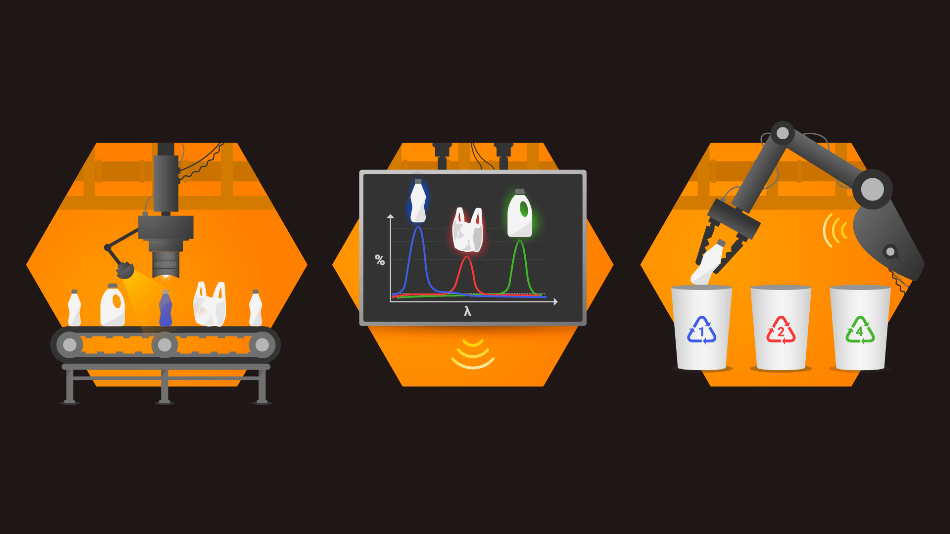
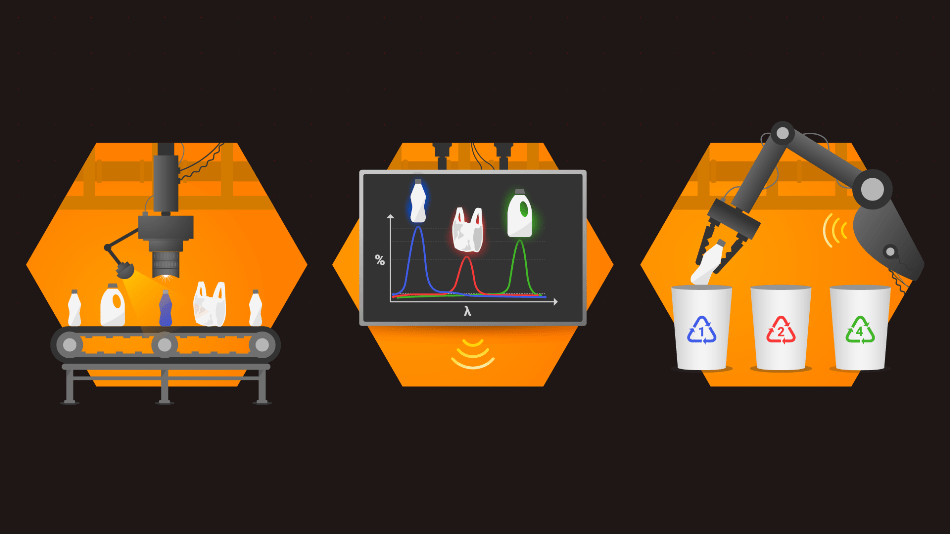
Graphene can be used to enhance photonics, as a detector for light, an optoelectronic transceiver, or as part of high-resolution imaging systems.
A surprising application of graphene is its use in photodetectors. Light detection capabilities of graphene are inherently limited because a single sheet of the material absorbs only ~2.3% of light across the visible part of the spectrum. Such high transparency is desired for applications such as transparent conductors, however detecting light requires strong absorption. Nevertheless, the frequency-independent absorption of graphene coupled with extremely high carrier mobility peaked the interest of optics researchers, who found that interfacing graphene with strong light-absorbing materials can result in excellent practical photodetectors that surpass the capabilities of competing materials.
A particularly interesting direction of research is the use of hybrid graphene-quantum dot photodetectors as broadband image sensors for CMOS cameras. These fab-compatible devices have very high responsivity, on the order of 107 A/W and operate in both the visible and short-wave infrared parts of the spectrum (300-2,000 nm). The response times are fast enough (0.1-1 ms) for use in infrared cameras. What is perhaps the most interesting about this device is that it is a CMOS integrated circuit, similar to those used for commercial image sensors in digital cameras, commonly used in smartphones.

Nanotechnology cancer treatments may lead to destroying cancer tumors with minimal damage to healthy tissue and organs, as well as the detection and elimination of cancer cells before they form tumors.
Most efforts to improve cancer treatment through nanotechnology are at the research or development stage. However there are many universities and companies around the world working in this area.
The next section provides examples of the research underway, a few of the methods discussed have reached the pre-clinical or clinical trial stage
Graphenea announces the launch of a new product – highly flat monolayer graphene. The graphene is grown by CVD on copper thin film on a 2” sapphire substrate. With extremely low roughness that is less than 4 nm, this new product is targeted at applications in photonics, high-performance electronics, magnetic memory, and freestanding membranes.
The product aims to meet wafer-scale integration requirements to build uniform graphene devices in a fashion compatible with current industrial fabrication methods. The flat graphene product is ready to be transferred by electrochemical delamination or dry methods since the sapphire substrate is robust enough to withstand mechanical damage, preventing tearing and wrinkling of the thin Cu sheet. The total wafer thickness is 430 micrometers.
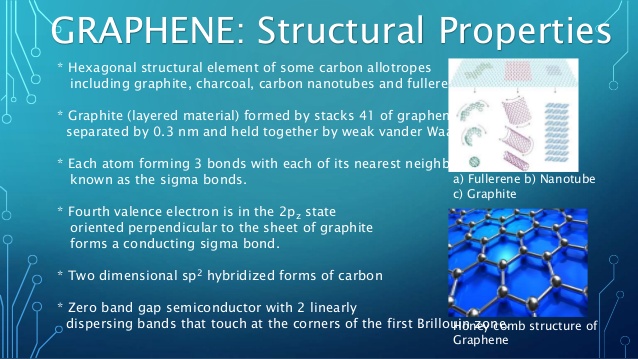
The first time graphene was artificially produced; scientists literally took a piece of graphite and dissected it layer by layer until only 1 single layer remained. This process is known as mechanical exfoliation. This resulting monolayer of graphite (known as graphene) is only 1 atom thick and is therefore the thinnest material possible to be created without becoming unstable when being open to the elements (temperature, air, etc.). Because graphene is only 1 atom thick, it is possible to create other materials by interjecting the graphene layers with other compounds (for example, one layer of graphene, one layer of another compound, followed by another layer of graphene, and so on), effectively using graphene as atomic scaffolding from which other materials are engineered. These newly created compounds could also be superlative materials, just like graphene, but with potentially even more applications.

Migratory songbirds can perceive the Earth’s magnetic field for the purpose of navigating their exceptional voyages or orienting in their local habitats. One particular modality of this sense, a magnetic inclination compass, is thought to rely on magnetically sensitive radical pairs formed photochemically in cryptochrome proteins in the animal’s retinae. This process is a striking example of a truly quantum mechanical process in sensory biology. It necessitates long-lived electron spin coherences in the radical pair.
An important requirement of this hypothesis is that the electron spin relaxation is slow enough for the Earth’s magnetic field to have a significant effect on the coherent spin dynamics of the transient radical pair. This proposal aims to elucidate spin relaxation pathways based on a comprehensive analysis of the thermally induced motions in the radicals and their surroundings.

| Nanotechnology is becoming a crucial driving force behind innovation in medicine and healthcare, with a range of advances including nanoscale therapeutics, biosensors, implantable devices, drug delivery systems, and imaging technologies. |
| Universities also have begun to offer dedicated nanomedicine degree programs (example: MSc program in Nanotechnology for Medicine and Health Care). |
| A nanotechnology-based system, for instance to eradicate cancer, needs four elements:1) Molecular imaging at the cellular level so that even the slightest overexpressions can be monitored;2) effective molecular targeting after identifying specific surface or nucleic acid markers;3) a technique to kill the cells, that are identified as cancerous based on molecular imaging, simultaneously by photodynamic therapy or drug delivery, and4) a post molecular imaging technique to monitor the therapeutic efficacy. |
| In the following, we’ll cover these four areas and provide a comprehensive overview of healthcare advances that may be possible through nanotechnology, ranging from fitness monitoring, prevention, diagnosis to therapy, and everything in between. |
| Fitness Monitoring |
| When you hear ‘fitness monitoring’ you probably think of the plethora of smartphone apps and the bracelets and wristbands that are on the market. Nanomaterials are going to open new realms of possibility for these monitoring gadgets. |

Emulsions, mixes of immiscible liquids such as oil and water, are found in products that range from pharmaceuticals and pesticides to make-up and mayonnaise. ‘Multi-emulsions’, multi-layered matryoshka doll style, oil-in-water-in-oil systems have seen growing interest from academics in recent years. However, current methods work only on large-scales and produce single multi-emulsions at slow rates.
Now, academics from the US West Coast have developed a process to solve some of the problem incolved in creating multi-emulsions. Their technology uses sequential, high-energy emulsification to create nanometre-sized droplets of oil, suspended in water droplets, which are in turn suspended in a second oil. This innovation opens the door for products such as novel encapsulated drugs and pesticides, or even for ultra-low-fat salad dressings.

Nanoparticles have proved useful for delivering cancer-killing therapies.
Cornell University scientists, for example, were able to get tiny particles of gold alloy into the bloodstream and to cancer cells, where it can be heated up to kill them. The Cornell scientists chose gold — No. 79 on the Periodic Table — because of the ease in which it absorbs infrared heat. The researchers figured out how to attach the gold to colorectal-cancer-cell-seeking antibodies that delivered the gold to cancer cells.
“It’s a very, kind of cool, elegant solution,” says Folk, “but gold’s pretty inert, so what happens afterward? How is the gold taken from the body, and what organs is it interacting with? You have to look at the entire cycle.”
Meanwhile, MIT chemical engineers have designed nanoparticles that carry the cancer drug doxorubicin, as well as short strands of RNA that can shut off one of the genes that cancer cells use to escape the drug. The MIT researchers were searching for ways to treat an especially aggressive form of breast cancer.

 WORLD CONGRESS ON MATERIALS SCIENCE AND ENGINEERING